On October 14, students in my Professionalism in the Scientific Community course participated in an open and engaging discussion about imposter phenomenon. I intentionally use the term imposter phenomenon rather than imposter syndrome because the word syndrome implies an individual flaw or clinical issue. In contrast, phenomenon acknowledges that these feelings often arise from environmental and systemic factors. Many students experience self-doubt not because they lack ability, but because academic spaces can unintentionally fuel comparison, pressure, or uncertainty. Understanding this distinction helps reduce self-blame and encourages students to view their experiences in context.
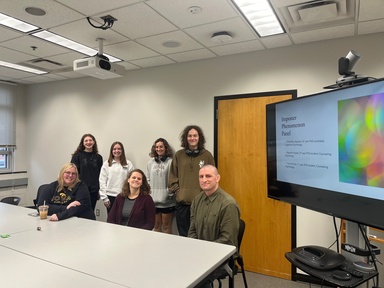
To support this conversation, our class welcomed three graduate panelists: Charlotte Jeppsen (PhD Candidate in Cognitive Psychology), Raechel Popek (PhD Student in Counseling Psychology), and Sam Brooks (PhD Student in Counseling Psychology). The panelists shared their own experiences with self-doubt, along with strategies that have helped them navigate challenging moments. Their openness helped normalize these feeling for undergraduates who may be encountering them for the first time.
Students asked questions about confidence, belonging, and how to stay grounded in academic settings. The panelists emphasized that moments of uncertainty are common during transitions and can be a natural part of developing as a scientist or scholar. They also highlighted the importance of mentorship, peer support, and community involvement in reducing feelings of isolation.
This event connects closely with the work happening across the Iowa Sciences Academy. The Peer Mentoring Program is now underway, offering students structured support as they explore research, career paths, and academic challenges. Mentorship opportunities can provide reassurance and a sense of shared experiences, which can significantly lessen the impact of imposter phenomenon.
In addition, the ISA Student Leadership Council has begun planning outreach efforts and community-building activities for the year. These opportunities allow students to step into leadership roles and contribute to the culture of ISA.
My sincere hope is that these classroom discussions, mentoring relationships, and leadership opportunities form an environment that helps you, as students, feel more confident, connected, and valued. Research shows that imposter phenomenon becomes easier to navigate when students have access to supportive structures and when their experiences are met with understanding rather than judgement. You all belong in ISA. Please contact me directly if you would like help finding more ways to become involved in ISA or other values-aligned campus activities.