Thanks to all who joined us for the annual ISA Scholar Symposium on Saturday, January 31, 2026! 60 people were in attendance, including ISA students, faculty, staff, and friends and family.
Eleven students gave short oral presentations about their research with a few minutes for questions and discussion. This event helped students gain experience in giving presentations in an oral format, in addition to poster presentations.
| TIME | PRESENTER | MAJOR | MENTOR |
| 10:00 | Dr. Lori Adams | Director, Iowa Sciences Academy - Welcome | |
| 10:05 | Seren Castellano Biology and Anthropology | Characterizing Sleep in New Zealand Freshwater Snails 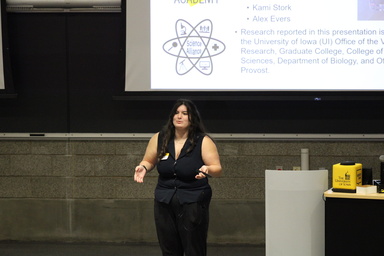
Abstract: Sleeping is a fundamental process shared across animals, however, we still do not understand why sleep is so common and important. Here, we build on previous work in my lab characterizing true sleep for the first time in a New Zealand freshwater snail, Potamopyrgus antipodarum, to determine whether true sleep is found in another species, P. estuarinus and how it differs between estuaries vs. freshwater habitats. This difference in habitat is intriguing in considering how tidal cycles might affect sleeping behavior. I used the criteria from Stephenson and Lewis (2010) to identify quiescence within four freshwater snails through (1) stereotypic posture where sleep is limited to a narrow range of bodily positions, (2) behavioral quiescence where no other behavior is exhibited during sleep such as such as eating or moving, (3) delayed or lowered stimulus response where the transitory state delays an organism’s response to stimulus, and (4) compensation following deprivation which requires the organism to sleep more or for longer periods of time due to delayed sleep. While these tests are still underway, outcomes will both expand our knowledge of sleeping behavior in mollusks and provide initial insights into how evolution in a tidal environment might shape sleeping behavior. | Dr. Maurine Neiman |
| 10:15 | Emily Formella Biomedical Engineering | Impact of simulated microgravity on chorioretinal cell fate and epithelial-to-mesenchymal transition 
Abstract: Spaceflight-associated neuro-ocular syndrome (SANS) affects long-duration astronauts, causing symptoms like increased intracranial pressure, retinal changes, and visual impairment. Microgravity is a key risk factor and has been known to disrupt biomechanical signaling in human cells. In this study, we aim to characterize the impact of simulated microgravity on the fate of RPE cells and investigate the role of epithelial to mesenchymal transition (EMT) in this response. ARPE-19 were cells cultured on microcarrier beads in a rotating wall vessel bioreactor to simulate microgravity, and we observed high cell viability and significant upregulation of RPE65 under these conditions. These findings demonstrate the feasibility of using a rotating wall vessel bioreactor to study RPE cells in a mechanically altered environment and motivate expanding this work with iPSC-derived RPE and choroidal endothelial cells | Dr. Kristan Worthington |
| 10:25 | Alayna Gallery Biochemistry & Molecular Biology and Human Physiology | pCREB Expression in Spinal Dopamine D1-Receptor Expressing Neurons During the Transition to Chronic Pain 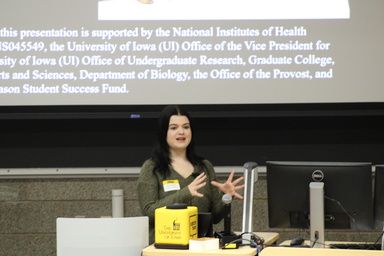
Abstract: Chronic pain conditions are highly prevalent, impacting millions of people worldwide, but the mechanisms that explain the transition to chronic pain are not fully understood. The focus of this project is to better understand the mechanisms of dopamine 1 (D1) receptors in the spinal cord and the role they play in the transition to chronic pain. D1 receptors are stimulatory GPCRs and can bind to dopamine released from A11 dopamine neurons in the brain, resulting in the production of protein kinase A (PKA), a molecule that plays important roles in downstream mechanisms further influencing pain. My research examines PKA activity indirectly through pCREB expression in spinal D1 receptor expressing neurons at two hours post-induction of our chronic widespread pain model. | Dr. Kathleen Sluka |
| 10:35 | Klaertje Hesselink Chemical Engineering | Engineering of Mixed Metal Oxide Nanoparticles 
Abstract: Nanoparticles have had excellent applications in many industries due to their unique behavior owing to their morphology, or their size and shape. Compared to their bulk form, nanoparticles will exhibit different chemical, optical, and electrical behaviors making them highly tunable to various applications. I specifically work with Iron-Gallium nanoparticles due to their potential for impact in medicine and energy production. I use a variety of synthesis techniques focusing on using greener solvents to reduce the environmental impact of synthesis. | Dr. Tori Forbes |
| 10:45 | Abigail Myroth Neuroscience and Ancient Civilizations | Whiskers, fingers, trunks, and snouts: Why does sleep-related twitching persist into adulthood? 
Abstract: Twitching during REM sleep persists into adulthood across diverse species. Whereas previous work in Dr. Blumberg’s lab has shown that twitching supports brain–body mapping during infancy, its continued occurrence in the adults of many species has not been widely acknowledged or explained. Thus, we collected and analyzed sleep behaviors from publicly available videos in over 40 species of animals, from mammals to invertebrates. Our findings reveal a striking pattern: Adult twitching occurs most prominently in appendages used for active sensing and that exhibit cortical magnification—rat whiskers, pig snouts, raccoon hands, platypus bills, and even octopus arms—all specialized for meeting the unique needs of each species. We propose that twitching serves to calibrate and maintain these specialized active sensors throughout life, with functional roles shifting across development from building basic sensorimotor circuits in infancy to maintaining function in adulthood. This theory takes on an evolutionary-development framework that may uncover new insights into sleep-dependent processes across phylogenetic distances and developmental periods. Implications from this research affect neurodevelopmental disorders, mechanisms of synaptic plasticity, and even therapeutic approaches for humans recovering from limb amputations or strokes. | Dr. Mark Blumberg |
| 10:55 | Short Break | ||
| 11:00 | Zachary Niemasz Neurobiology | Neurotoxicant, Polychlorinated Biphenyls (PCB) Exposure Leads to Long-Term Spatial Memory Deficits in Adult Mice 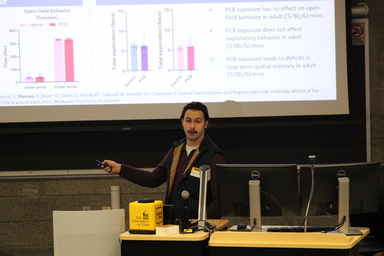
Abstract: Polychlorinated biphenyls (PCBs) are toxic synthetic chemicals formerly used in manufacturing that are associated with many chronic health issues, such as liver damage, skin conditions, and cancer. Epidemiological studies discovered high levels of PCBs in postmortem human brain samples which may lead to memory deficits. Loss of hippocampus-dependent spatial memory is a common symptom of Alzheimer’s Disease and Related Dementia (ADRD) pathology. Our goal was to investigate the impacts of PCB exposure on long-term spatial memory in C57BL/6J mice and whether PCB exposure accelerates development of memory impairment in a mouse model of ADRD. | Dr. Snehajyoti Chatterjee |
| 11:10 | McKinley Sanders Microbiology | Human Pegivirus Reduces Low-Level HIV Replication and Viral Blips 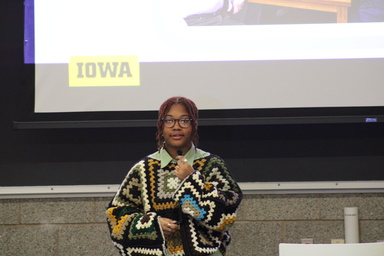
Abstract: Viral blips are the detection of transient increases in HIV RNA in the bloodstream of individuals who previously had undetectable levels. Human Pegivirus (HPgV) is a member of the Flaviviridae family and Pegivirus genus and is highly prevalent. Amongst people infected with HIV-1, HPgV is associated with improved survival in those individuals. Using real-time RT-PCR to detect HPgV RNA, HPgV-positive PLWH were identified and their likelihood of having viral blips was compared with HPgV-negative PLWH. Our results demonstrated that HPgV coinfection is significantly associated with the reduction of viral blips in PLWH. | Dr. Jack Stapleton |
| 11:20 | Bhoomika Shettigar Neuroscience | fNIRS Evidence for Transitional Frontal-Parietal Connectivity in Early Symbolic Number Acquisition 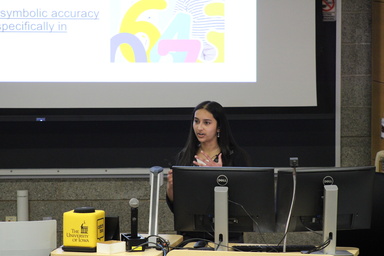
Abstract: Functional Near-Infrared Spectroscopy (fNIRS) is a neuroimaging technique that measures changes in hemodynamic response in the brain. The fNIRS cross-correlation function can be used to observe brain region connectivity during the shift observed in children when transitioning from learning non-symbolic (right parietal cortex) and symbolic numerical representations (frontal to left parietal cortex). When we ran linear mixed models with connectivity as DV and math performance (task accuracy and applied problems score) as the predictors (controlling for child age), our findings suggested that greater frontal involvement may reflect a transitional stage of symbolic number acquisition in which children rely on additional executive resources to support numerical representations. | Dr. Ece Demir-Lira |
| 11:30 | Kassandra Sigafus Biology | Investigating the Novel Disaggregase, ABCF-1, as a Member of the Processing Body Assembly Pathway 
Abstract: Protein aggregation is a hallmark of neurodegenerative diseases such as Alzheimer's and ALS, where misfolded proteins form toxic amyloid aggregates, yet cells also use controlled protein aggregation to organize biochemical reactions, forming dynamic, reversible structures like RNA Processing bodies (P-bodies). Both amyloids and P-bodies rely on similar phase-separation principles, but while amyloids are harmful, P-bodies are essential for normal RNA regulation. In Caenorhabditis elegans, P-body assembly depends on regulatory proteins PAB-1 (polyA-binding protein), CGH-1 (RNA helicase), and CAR-1 (RNA binding protein), and loss of any of these proteins causes abnormal aggregates and germline defects. We hypothesize that ABCF-1, a novel disaggregase, acts as part of this pathway, regulating PAB-1, CGH-1, and CAR-1. To test this, we utilized RNA interference (RNAi) to knock down our genes of interest in Green Fluorescent Protein (GFP) or OLLAS tagged reporter strains. We found that the ABCF-1 knockdown produced visible aggregates in the germline, which suggest that ABCF-1 helps dissolve or prevent large P-body aggregates by individually regulating multiple P-body components, linking normal protein quality control in worms to mechanisms relevant to human neurodegenerative disease. | Dr. Bryan T. Phillips |
| 11:40 | DeAndre Steger Psychology | Evaluating the Convergent Validity of Digital Processing-Speed Assessments: An Analysis of DSST, Letter Comparison, and Pattern Comparison Tasks 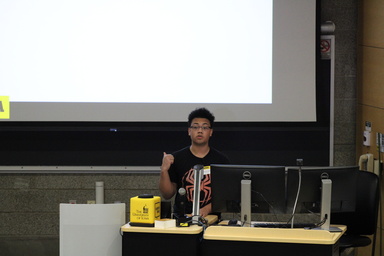
Abstract: This study evaluates the convergent validity of three digital neuropsychological processing-speed tasks: ”Digit Symbol Substitution Test (DSST), Letter Comparison (LC), and Pattern Comparison (PC) administered to middle-aged adults (ages 40 to 65). Raw test files were cleaned and merged using consistent identifiers, retaining only core performance variables (accuracy and reaction time) to ensure construct alignment across tasks. Participant-level summary scores were computed for each test to produce a unified dataset for correlation-based validity testing. This dataset will support both digital-to-digital convergent validity analyses and subsequent digital-versus-paper comparisons using matched paper-based scores. Findings will clarify the degree to which digital processing-speed tasks measure shared cognitive constructs and correspond to traditional paper formats. | Dr. Michelle Voss |
| 11:50 | Ellie Wojcikowski Neuroscience | Heart Rate Variability as a Marker of Social and Emotional Functioning in Schizotypy 
Abstract: Heart rate variability (HRV) is conceptualized as a physiological marker of how well the body adapts and regulates itself. HRV is associated with social cognitive abilities in non-clinical samples (Holzman & Bridgett, 2021; Quintana et al., 2012) and is reduced in schizophrenia (Benjamin et al., 2021). Little is known about HRV along the psychosis continuum, including psychometric schizotypy (SZY), which is typified by subthreshold psychotic-like experiences and is associated with reduced social functioning. We studied undergraduate students (n = 44) with elevated SZY, using resting state electrocardiography (ECG) assessment for HRV and the Brief Social Skills Inventory (B-SSI), a self-report measure of emotional intelligence and social competency, including expression of emotion (Emotion Expression), higher-level regulation and management of one's emotional states (Emotion Control), perception of emotional states of others (Emotion Sensitivity), and social adeptness (Social Control). Our findings support that HRV may serve as a valuable biomarker of social functioning along the psychosis continuum and a promising target for interventions aimed at improving emotional and social skills in young adults with elevated SZY. | Dr. Amanda McCleery |