Are you planning for applying to graduate school and ultimately a research career in STEM? Join us for "Building Your Professional Blueprint" on October 14 from 5:30–6:30 PM in 106 Biology Building East, where three accomplished scholars will share insights on how to shape your path toward success. All ISA students are required to attend.
Join us for a panel discussion where our guests will share "blueprints" of their professional pathways. They will share how skills, experiences, and networks have shaped their careers. With expertise spanning cell biology, biomedical education, and space physics, our speakers will offer diverse perspectives and answer your questions about navigating the next steps in your STEM journey—plus, food will be provided!
Students are encouraged to come prepared with questions. This is your chance to ask about graduate school decisions, paths to grad school that might include postbac programs or gap years, research experiences, mentorship, and more. Whether you're just beginning to imagine your future or already planning your next steps, this conversation will help you think strategically about how to build a career that reflects your values and aspirations.
Read more about our invited panelists below:
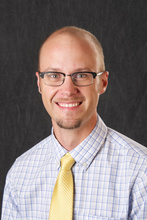
Dr. Darren Hoffmann, Associate Professor and Vice Chair for Education in the Department of Anatomy and Cell Biology at the University of Iowa, is a nationally recognized educator and researcher in biomedical sciences. With disciplinary expertise in Gross Anatomy, he also teaches courses in Embryology, Molecular and Cellular Biology, and Higher Education pedagogy. Since joining the Carver College of Medicine in 2006, Dr. Hoffmann has taught students across a broad spectrum of academic levels and health professions, including undergraduates, PhD candidates, and students in medicine, dentistry, physical therapy, and massage therapy. His research focuses on enhancing anatomy education through innovative technologies such as virtual anatomy platforms, online video instruction, and interactive digital tools. He has led studies evaluating the integration of these technologies into curricula and developed Carverpedia, a wiki-based platform for medical students to share study resources. Dr. Hoffmann also created Transforming Your Research into Teaching, a workshop series that helps graduate students design college-level courses based on their research, now scaled nationally to support hundreds of future educators. Dr. Hoffmann also serves as the Director of Curriculum for the Biomedical Science Graduate Program (BSP) and is the Associate Director for Education and Evaluation for the University of Iowa’s Medical Scientist Training Program (MSTP). Dr Hoffman is a recipient of the 2025 President and Provost Award for Teaching Excellence from the University of Iowa, recognizing his exceptional and ongoing contributions to student learning and success. |
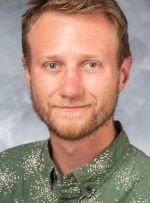
Jacob Payne is a fourth-year PhD candidate in Physics & Astronomy at the University of Iowa, where he researches pulsars and X-ray telescope optics to advance Pulsar-informed Navigation (PIN) for small spacecraft exploring the Solar System. Jacob earned both his BS and MS in Aerospace Engineering from Georgia Tech, focusing on CubeSat-scale spacecraft subsystems before working at Blue Canyon Technologies in Boulder, CO. In addition to his research, Jacob serves as Director of the Physical Health & Safety Committee in the Graduate & Professional Student Government, where he advocates for improved access to campus resources and communication channels to support student success. His work bridges cutting-edge space science with a deep commitment to student well-being and community engagement. Jacob was a teaching assistant for the Latham Science Communication courses in 2023-2024. He recently received a prestigious three-year award from NASA’s Future Investigators in NASA Earth and Space Science and Technology (FINESST) program award to design and prototype a smaller, more efficient X-ray telescope to aid in space navigation. Payne credits the guidance he’s received from Casey DeRoo, associate professor in the Department of Physics and Astronomy towards his success. |
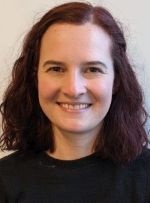
Dr. Katheryn Rothenberg, Assistant Professor in Biology at the University of Iowa, investigates how cells receive and transmit mechanical and biochemical information through contacts with other cells and the extracellular matrix (ECM), and how they integrate this information to make decisions about their fate—including differentiation, growth, and migration. Her research focuses on collective cell migration, a process by which groups of cells move together to create, shape, and repair tissues, and how cell adhesions contribute to the mechanochemical signaling pathways that drive this behavior. To study these processes, Dr. Rothenberg uses Drosophila embryos and human cell lines as models, tagging proteins of interest with fluorescent markers to visualize them inside living cells and embryos. Her lab employs genetic, pharmacological, and biophysical tools to test the roles of specific genes and proteins in forming epithelial tissues and facilitating collective migration. Using spinning disk confocal microscopy and time-lapse imaging, her team captures dynamic processes from the subcellular to the tissue scale, analyzing images with custom-written code to extract meaningful data on adhesion formation and reinforcement, migration speed, and other key characteristics. |